Planets Coloring Book: Explore the Wonders of the Solar System
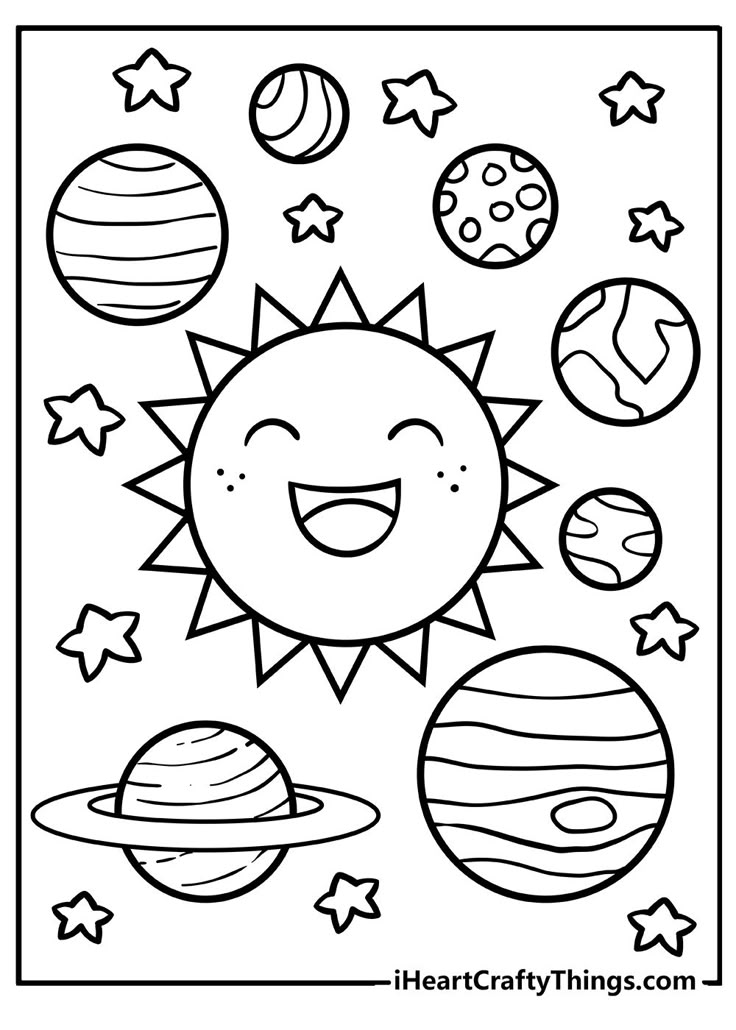
Indulge your curiosity and creativity with a planets coloring book, a fun and educational way to explore our universe. These engaging books are designed to captivate both kids and adults alike, combining the joy of coloring with the wonder of astronomy.
Immerse yourself in the cosmos as you color in vivid details of celestial bodies, from the sun's flares to the rings of Saturn. These intricate designs offer more than just artistic satisfaction; they're an opportunity to learn about our cosmic neighborhood.
Understanding the Solar System
Planets coloring books typically feature our solar system's eight planets, starting from the sun and moving outwards. These include Mercury, Venus, Earth, Mars, Jupiter, Saturn, Uranus, and Neptune. Each planet has unique characteristics, providing ample opportunities to learn and explore.


Dive into the fascinating worlds of these celestial bodies, learning about their sizes, colors, and notable features. For instance, observe how Jupiter's colorful bands and the Great Red Spot stand out on your colored page, mirroring the gas giant's real-life peculiarities.
The Sun and Its Flares
The sun, our solar system's star, deserves special attention in any planets coloring book. Its prominent size and fiery hues make it a vibrant centerpiece. Color its flares, sunspots, and even the sun's dynamic corona, adding life and detail to your illustration.


Note the different colors you can use for the sun and its features, representing different temperatures. This not only enriches your artwork but also educates you about solar physics – an engaging fusion of art and science.
Planetary Moons and Asteroids
Many planets in a coloring book may feature their moons, presenting additional subjects to color and learn about. Consider the prominent moons of Jupiter, including Ganymede, the largest moon in our solar system. Color its unique icy surface, distinct from the rocky moons of other planets.
Some books might also include asteroids, like Ceres, the largest object in the asteroid belt. Color these rocky bodies, often depicted in shades of gray, and enrich your understanding of our solar system's minor bodies.




The lure of Exoplanets
Venturing beyond our solar system, some planets coloring books delve into the world of exoplanets. These are planets that orbit around stars outside our Sun. Color distant super-Earths and gas giants, each with its unique characteristics and challenges for astronomers.
For example, consider TRAPPIST-1d, part of an intriguing seven-planet system. Color its deep red hue due to its iron-rich atmosphere, a stark contrast to the familiar blue stripes of water-dominated Earth.
States of Matter in the Cosmos
The diversity of exoplanets showcases various states of matter in the universe. Many are gas giants, similar to Jupiter and Saturn. Color their swirling storms and intricate banding, similar to but often much more dynamic than their solar system counterparts.

Rocky exoplanets, like Earth but potentially much larger, can have thick atmospheres due to their intense gravitational pull. Prepare your palette to color these diverse atmospheric compositions, from cloudy to misty to stormy.
With every stroke of your pencil or crayon, a planets coloring book paint a vivid picture not just on the page, but in your mind's eye. Unveil the mysteries of the cosmos, one colored planet at a time, and see your artistic skills bloom amidst the stars.
Related Articles
Free Printable Coloring Pages of Planets: Explore the Solar System
{"description": ["20 Solar System Coloring Pages (Free PDF Printables)", "Make learning space fun and screen-free 🌍✨ Download these 5 solar system learning...
Planets Printable Coloring Pages: Explore the Solar System for Kids
{"description": ["Make learning space fun and screen-free 🌍✨ Download these 5 solar system learning coloring pages free printable featuring planets, stars, and...

Free Planets Coloring Pages: Explore the Solar System!
{"description": ["Make learning space fun and screen-free 🌍✨ Download these 5 solar system learning coloring pages free printable featuring planets, stars, and...
Color Pages Planets: Explore the Solar System with Fun Coloring Pages
{"description": ["Make learning space fun and screen-free 🌍✨ Download these 5 solar system learning coloring pages free printable featuring planets, stars, and...
Solar System Coloring Book: Explore the Galaxy One Planet at a Time
{"description": ["Make learning space fun and screen-free 🌍✨ Download these 5 solar system learning coloring pages free printable featuring planets, stars, and...
Planets Coloring Pages Printable: Explore the Solar System!
{"description": ["Make learning space fun and screen-free 🌍✨ Download these 5 solar system learning coloring pages free printable featuring planets, stars, and...