Coloring Book Solar System: A Galactic Adventure
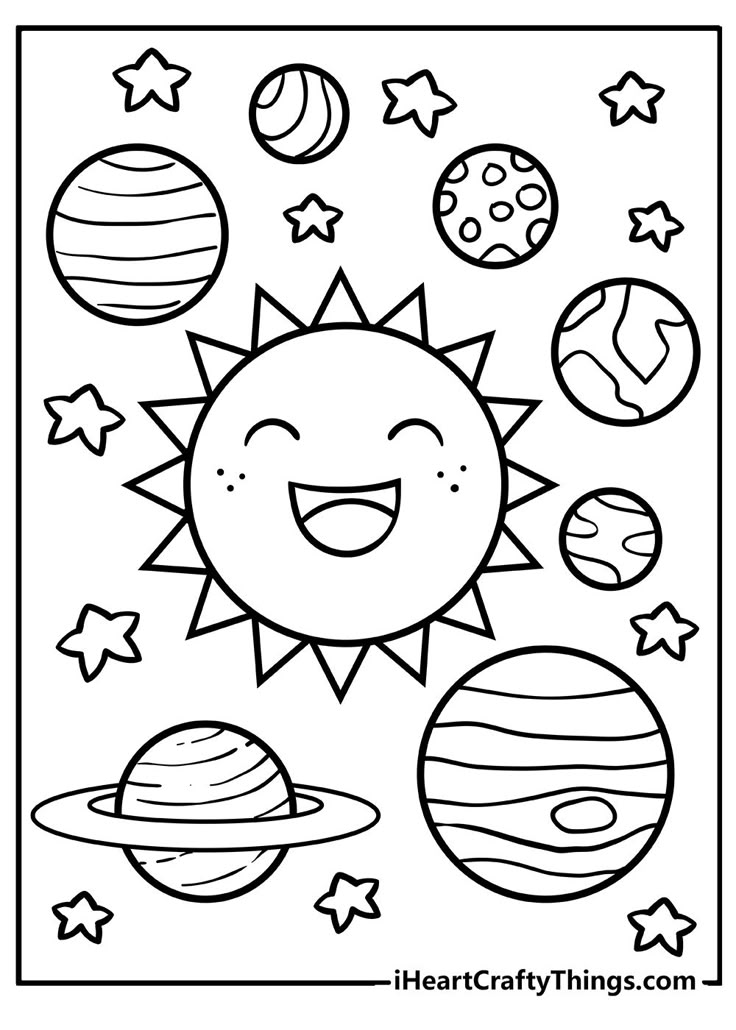
Dive into a cosmic adventure with a Coloring Book Solar System! Combine creativity with education as you fill in the hues of our universe. This interactive learning experience is perfect for both kids and adults looking to indulge their artistic side while exploring the wonders of space.
Imagine transforming a blank page into the vibrant colors of the sun, or giving planet Jupiter its iconic stripes. It's not just about unleashing your inner artist; it's about learning while you enjoy. Let's embark on this interstellar journey.
Celestial Bodies and Their Colors
The solar system is a kaleidoscope of colors, each shade telling a story. From the warm glow of the sun to the icy blues of Neptune, let's dive into the unique hues of our celestial neighborhood.


Our solar system has eight official planets, each with its unique color palate. Add to that an array of dwarf planets, moons, and other celestial bodies, and you've got a spectrum as vast as the cosmos itself.
The Sun: The Life-giving Star
The sun, a giant ball of hot plasma, is mostly yellow-white in color. But depending on the time of day, it can take on hues of red, orange, and even purple at sunrise or sunset. When coloring your solar system, make sure to give the sun its vibrant center.


But remember, the sun's heat and light are vital for life on Earth. As you color, think about how the sun's energy powers our planet and fuels our existence.
Planets: A Rainbow in Space
Each planet in our solar system is unique not just in size and distance from the sun, but in color as well. Mercury and Venus are closest to the sun, reflecting its yellowish color. Opposite to that, Neptune and Uranus are blue, thanks to their atmospheric composition.
Earth, with its vast oceans and green landmasses, is predominantly blue and green. Mars, the 'red planet,' is named for its reddish hue due to the iron oxide (rust) on its surface. So, prepare your art kit to capture these diverse colors.



Coloring the Solar System: Tips and Tricks
With a basic understanding of the colors, let's dive into how to bring the solar system to life. Remember, there's no wrong way to color, so let your imagination run wild!
However, keeping a few tips in mind can help enhance your masterpiece. Let's explore some techniques and tools to make your coloring journey fun and educational.
Choose the Right Tools
Selecting the right tools for the job is crucial. For digital artists, there are numerous apps and software with built-in solar system coloring book features. If you prefer traditional methods, go for vibrant colored pencils, markers, or crayons.

Don't forget to consider special effects like glitter or 3D pens for added flair. The right tools can bring your interstellar creation to life, so choose wisely.
Leaving Space: The Universe's Biggest Secret
While it's tempting to fill every single corner, don't forget that space is full of empty expanses. Leave blank areas to represent the endless void between planets and stars. This not only represents reality accurately but also adds a sense of scale to your artwork.
Besides, too much color can be overwhelming. Use white space effectively to balance your composition.
Whether you're an adult indulging in some creative 'me time' or a parent helping your child learn about space, a coloring book solar system is more than just a fun activity. It's a powerful tool for learning and exploration. So, grab your colors and let's create our universe together.
Related Articles

Solar System Coloring Pictures: A Galactic Adventure for All Ages
{"description": ["Make learning space fun and screen-free 🌍✨ Download these 5 solar system learning coloring pages free printable featuring planets, stars, and...
Coloring Sheet Solar System: A Galactic Adventure for Kids
{"description": ["Make learning space fun and screen-free 🌍✨ Download these 5 solar system learning coloring pages free printable featuring planets, stars, and...
The Solar System Coloring Page: A Fun Galactic Adventure
{"description": ["Make learning space fun and screen-free 🌍✨ Download these 5 solar system learning coloring pages free printable featuring planets, stars, and...
The Solar System Coloring Pages: A Galactic Adventure for Kids
{"description": ["Make learning space fun and screen-free 🌍✨ Download these 5 solar system learning coloring pages free printable featuring planets, stars, and...

Outer Space Coloring Book: A Galactic Adventure for All Ages
{"description": ["Fun alien car scene with two aliens and colorful planets — perfect for kids' space-themed coloring pages", "Blast off into creativity! This...
Planet Coloring Book: A Galactic Adventure for All Ages
{"description": ["Make learning space fun and screen-free 🌍✨ Download these 5 solar system learning coloring pages free printable featuring planets, stars, and...